Scrcpy Setup: Guide for Windows, Mac & Linux (2026)
If you are looking for a free, fast, and reliable way to mirror and control your Android device from your computer, scrcpy is the best tool available. It allows you to display and control your Android device directly from your Windows, macOS, or Linux computer with no root access required and nothing installed on your phone.
In this complete scrcpy setup guide, you will learn how to install and run scrcpy on Windows, macOS, and Linux — including wireless setup, useful commands, and fixes for common errors.
Complete Scrcpy Setup Guide
Learn how to install, configure, and use Scrcpy on Windows, macOS, and Linux. This complete setup guide covers USB, wireless connection, useful commands, and common error fixes.
Whether you are a developer testing apps, a gamer playing on a bigger screen, or simply someone who wants to manage their Android phone hands-free, scrcpy is the most lightweight and powerful solution available in 2026.
Requirements Before Scrcpy Setup
Before you begin the scrcpy setup process, make sure you have the following ready:
- An Android device running Android 5.0 (API 21) or higher
- A Windows, macOS, or Linux computer
- A USB cable for the initial connection
- USB Debugging enabled on your Android device
- ADB (Android Debug Bridge) installed on your computer
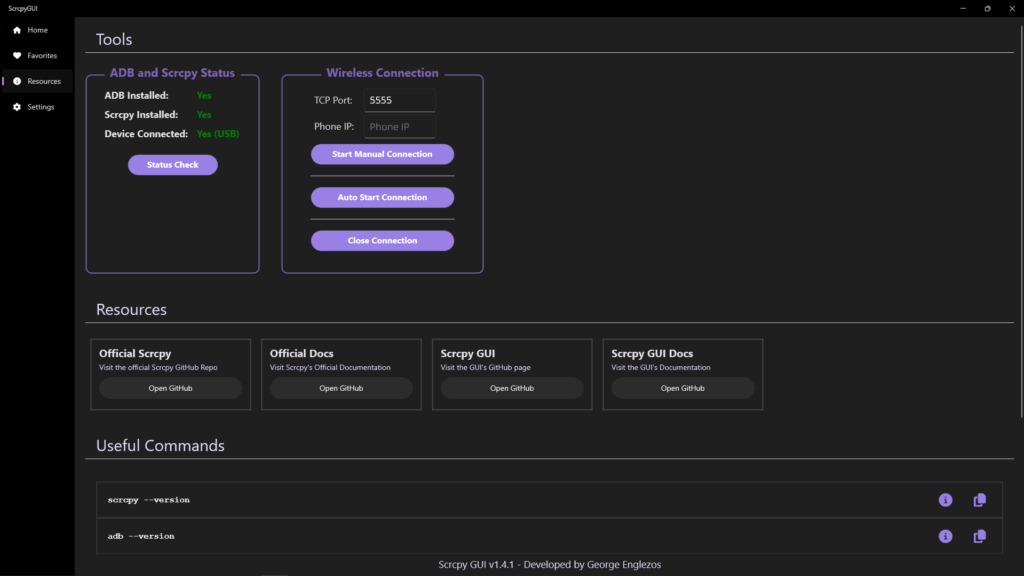
Note for Windows users: The scrcpy Windows package already includes ADB, so you do not need to install it separately.
How to Enable USB Debugging on Android
USB Debugging must be enabled before scrcpy can connect to your Android device. Follow these steps:
- Open Settings on your Android phone
- Scroll down and tap About Phone
- Tap Build Number seven times — you will see a message saying “You are now a developer!”
- Go back to Settings → Developer Options
- Toggle on USB Debugging
Xiaomi users: Also enable USB Debugging (Security Settings) in Developer Options and reboot your device after enabling it.
Scrcpy Setup on Windows
Setting up scrcpy on Windows is the simplest process of all three platforms and requires no command-line knowledge for basic use.
- Visit the official GitHub page at github.com/Genymobile/scrcpy
- Download the latest Windows ZIP release
- Extract the ZIP folder to any location on your computer
- Connect your Android phone via USB
- When prompted on your phone, tap Allow to permit USB debugging
- Open the extracted folder and run the terminal from inside it
- Type scrcpy and press Enter
Your Android screen will instantly appear in a window on your desktop. You can now control your phone using your mouse and keyboard.
Important: Do not double-click scrcpy.exe directly. If an error occurs, the window will close before you can read the error message. Always launch via the terminal for easier troubleshooting.
Scrcpy Setup on macOS
The easiest way to install scrcpy on macOS is through Homebrew. If you do not have Homebrew installed, visit brew.sh and follow the one-line installation command.
Once Homebrew is ready, open your Terminal and run: brew install scrcpy
After the installation completes, connect your Android device via USB, allow USB debugging when prompted on your phone, then simply type scrcpy in the terminal and press Enter. Your phone screen will appear in a window on your Mac.
Scrcpy Setup on Linux
On Linux, scrcpy can be installed using your distribution’s package manager. Open your terminal and run the appropriate command for your distro:
- Ubuntu / Debian: sudo apt update && sudo apt install scrcpy
- Fedora / RHEL: sudo dnf install scrcpy
- All distros (latest version via Snap): sudo snap install scrcpy
After installation, connect your Android device via USB, confirm the USB debugging prompt on your phone, and run scrcpy in the terminal to start mirroring.
Wireless Scrcpy Setup Over Wi-Fi
One of scrcpy’s most useful features is the ability to connect wirelessly over Wi-Fi once the initial USB setup is complete. Both your phone and computer must be connected to the same Wi-Fi network.
Follow these steps:
- Connect your phone via USB and confirm scrcpy works over USB first
- In the terminal, run: adb tcpip 5555
- Find your phone’s IP address under Settings → Wi-Fi → your network
- Run: adb connect YOUR_PHONE_IP:5555
- Unplug the USB cable
- Run scrcpy — your phone will now mirror wirelessly
Replace YOUR_PHONE_IP with your actual phone IP address, for example 192.168.1.5.
Useful Scrcpy Commands
Once scrcpy is set up, you can use these commands to customise your experience:
| Command | What It Does |
| scrcpy –max-size 1024 | Limits resolution to save CPU |
| scrcpy –max-fps 30 | Caps frame rate at 30fps |
| scrcpy –fullscreen | Launches in fullscreen mode |
| scrcpy –show-touches | Shows touch points on screen |
| scrcpy –record file.mp4 | Records your screen to an MP4 file |
| scrcpy –turn-screen-off | Turns phone screen off while mirroring |
| scrcpy –no-audio | Disables audio forwarding |
Troubleshooting Common Scrcpy Errors
- Device Not Detected Run adb devices in your terminal. If your device is not listed, try a different USB cable, change your phone’s USB mode to “File Transfer” (MTP), and confirm USB Debugging is enabled.
- Scrcpy Window Not Opening This usually happens when ADB is not in your system PATH. On Windows, always use the terminal inside the scrcpy folder. On Mac and Linux, reinstall ADB and confirm it runs correctly from the command line.
- High Latency or Lag Reduce the video resolution and bitrate to improve performance on older hardware by running: scrcpy –max-size 800 –video-bit-rate 2M
- Xiaomi Input Permission Error Enable “USB Debugging (Security Settings)” in Developer Options in addition to standard USB Debugging, then reboot your device.
Conclusion
Scrcpy is the most powerful free screen mirroring tool available for Android in 2026. Whether you are setting it up on Windows, macOS, or Linux — via USB or wirelessly — the process is straightforward and takes less than five minutes. With no root required, no app installation on your phone, and an active development community, scrcpy remains the top choice for developers, gamers, and everyday users alike.
Frequently Asked Questions